

Future Technologies & Market Evolution
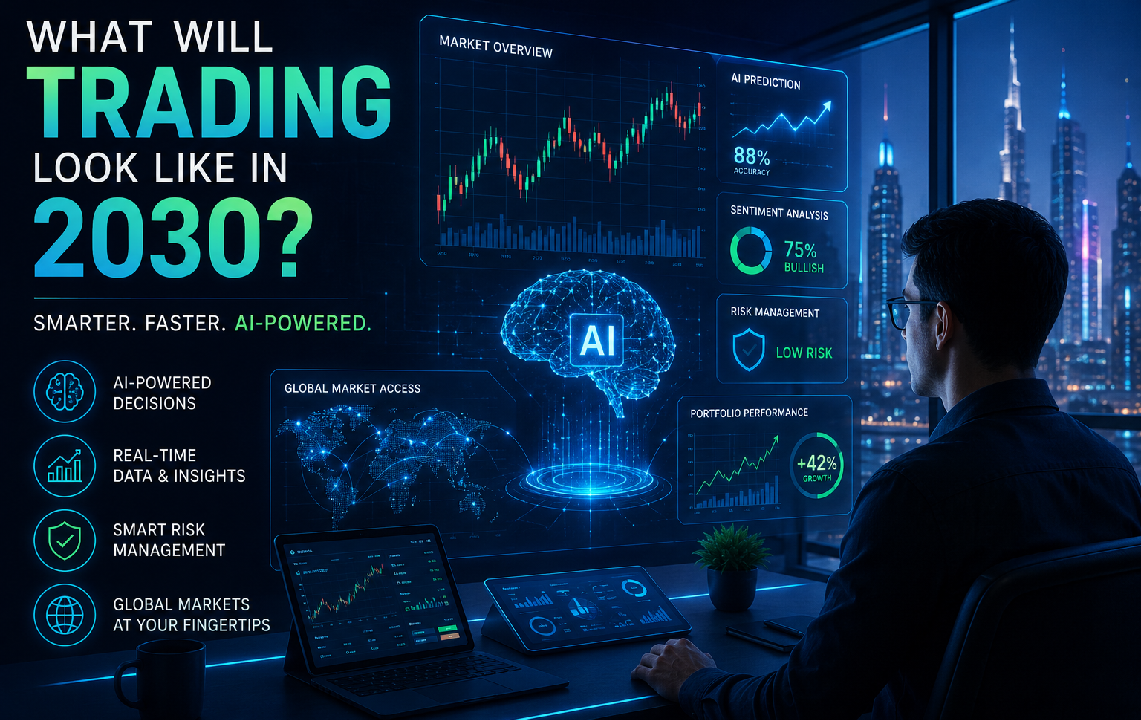
The world of trading is evolving faster than ever before. Artificial Intelligence (AI), blockchain, quantum computing, and advanced automation are reshaping financial markets at an unprecedented pace. By 2030, trading is expected to become smarter, faster, and more accessible than ever, giving both professional and retail investors powerful tools that were once available only to large financial institutions.
Whether you’re a beginner or an experienced trader, understanding these upcoming changes can help you stay ahead of the market.
The Evolution of Trading
Trading has transformed dramatically over the past two decades.
- Manual phone-based trading evolved into online platforms.
- Desktop software shifted to mobile trading apps.
- Technical analysis expanded with AI-powered insights.
- Human decisions are increasingly supported by automation.
By 2030, markets will likely be driven by intelligent systems capable of analyzing millions of data points within seconds.
1. Artificial Intelligence Will Become Every Trader’s Assistant
AI is already changing how traders analyze markets, but by 2030 it could become an essential part of every trading platform.
Future AI tools may:
- Analyze global news instantly.
- Detect hidden market patterns.
- Suggest high-probability trade setups.
- Monitor portfolio risk automatically.
- Learn from a trader’s behavior and improve recommendations.
Instead of replacing traders, AI will act as a personal trading assistant, helping users make more informed decisions.
2. Automation Will Dominate Trading
Algorithmic trading will become even more common.
Future trading systems may automatically:
- Enter trades
- Exit positions
- Manage stop-loss levels
- Adjust position sizes
- Rebalance investment portfolios
Retail investors will have access to advanced automation tools without needing programming knowledge.
3. Real-Time Data Will Be More Valuable Than News
By 2030, traders may rely less on traditional news and more on live data analysis.
Important data sources will include:
- Economic indicators
- Social media sentiment
- Satellite imagery
- Consumer spending data
- Shipping and logistics information
- Supply chain tracking
Markets often react before headlines appear. The ability to interpret real-time data could become a major competitive advantage.
4. Blockchain Will Increase Market Transparency
Blockchain technology has the potential to modernize financial markets by making transactions faster, more secure, and easier to verify.
Potential benefits include:
- Faster settlement times
- Reduced fraud
- Lower transaction costs
- Transparent ownership records
- Smart contract execution
Tokenized stocks and digital assets may become more widely available, allowing investors to trade around the clock.
5. Mobile Trading Will Continue to Grow
By 2030, smartphones may become the primary trading device for millions of investors.
Future mobile apps could offer:
- AI-powered market analysis
- Voice-controlled trading
- Real-time portfolio monitoring
- Personalized investment suggestions
- Advanced charting tools
- Instant global market access
The gap between professional trading platforms and mobile applications will continue to narrow.
6. Personalized Trading Experiences
Trading platforms will increasingly adapt to each user’s goals, experience, and risk tolerance.
Features may include:
- Customized dashboards
- Personalized watchlists
- AI-generated learning plans
- Adaptive educational content
- Individualized risk management suggestions
Instead of a one-size-fits-all platform, traders will enjoy a highly personalized experience.
7. Quantum Computing Could Revolutionize Market Analysis
Although still developing, quantum computing has the potential to transform financial modeling.
Possible applications include:
- Faster portfolio optimization
- Advanced risk simulations
- Complex market forecasting
- Large-scale data processing
While widespread adoption may take longer than 2030, early implementations could provide a significant advantage to institutional investors.
8. Global Markets Will Become More Connected
Technology is reducing barriers between financial markets.
By 2030, investors may easily access:
- International stocks
- Global ETFs
- Digital assets
- Commodities
- Foreign currencies
- Fractional ownership of high-value assets
Cross-border investing is expected to become simpler and more affordable.
9. Stronger Cybersecurity Will Be Essential
As technology advances, cybersecurity will become even more important.
Future trading platforms will likely implement:
- Biometric authentication
- AI-based fraud detection
- Multi-factor authentication
- Advanced encryption
- Continuous threat monitoring
Protecting user data and financial assets will remain a top priority.
10. Human Judgment Will Still Matter
Despite technological advancements, successful trading will continue to rely on human qualities such as:
- Discipline
- Patience
- Risk management
- Emotional control
- Strategic thinking
Technology can improve decision-making, but it cannot fully replace human experience and sound judgment.
Skills Every Future Trader Should Learn
To succeed in the evolving markets, traders should focus on developing:
- Technical analysis
- Fundamental analysis
- Risk management
- Data interpretation
- AI tool usage
- Financial psychology
- Portfolio diversification
- Continuous learning
The traders who adapt to new technologies while maintaining strong trading discipline are likely to have the greatest long-term success.
Challenges Ahead
While future technologies offer exciting opportunities, they also present challenges:
- Increased market competition
- Faster market movements
- Overreliance on AI tools
- Cybersecurity risks
- Regulatory changes
- Information overload
Understanding these risks will be just as important as embracing new technologies.
Final Thoughts
The trading landscape of 2030 will be shaped by artificial intelligence, automation, blockchain, real-time data, and enhanced mobile experiences. These innovations will make trading faster, smarter, and more accessible to investors worldwide.
However, technology alone will not guarantee success. The most successful traders will combine advanced tools with disciplined risk management, continuous education, and thoughtful decision-making. As markets continue to evolve, those who embrace innovation while staying grounded in sound trading principles will be best positioned to thrive in the next generation of financial markets.