

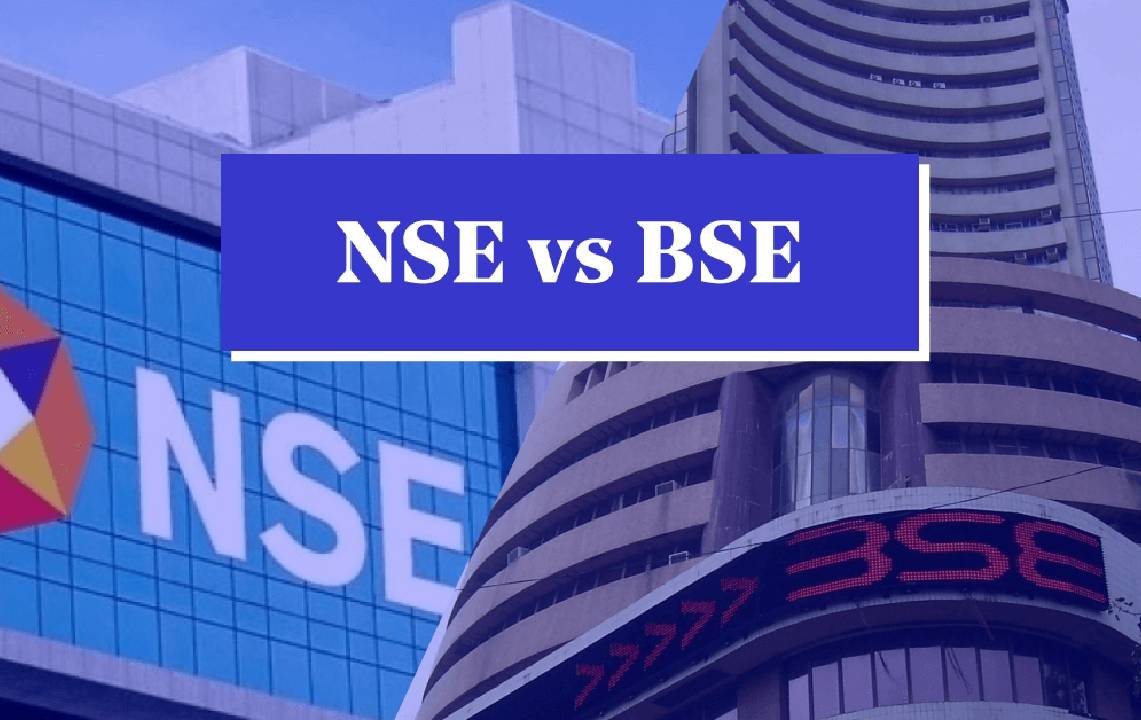
The Indian stock market is a hub for buying and selling securities, including shares, bonds, and derivatives. For beginners and even experienced investors, understanding how it functions is crucial to make informed decisions. This guide explains how the stock market works in India and the roles of the NSE (National Stock Exchange) and BSE (Bombay Stock Exchange).
What is the Stock Market?
The stock market is a platform where companies raise capital by issuing shares, and investors buy and sell these securities. It serves two main purposes:
- Capital Formation for Companies – Companies raise funds for expansion and projects.
- Investment Opportunities for Investors – Investors can earn returns through capital gains and dividends.
How the Stock Market Works in India
The Indian stock market operates in two main segments:
-
Primary Market
- Companies issue shares for the first time through an Initial Public Offering (IPO).
- Investors can buy these shares directly from the company at the issue price.
- Helps companies raise fresh capital for growth and expansion.
-
Secondary Market
- Shares that have already been issued are bought and sold among investors.
- Trading takes place on stock exchanges like NSE and BSE.
- Prices are determined by demand and supply dynamics.
💡 Insight: Most retail investors interact with the secondary market, not the primary market.
Key Players in the Stock Market
|
Player |
Role |
|
Investors |
Buy and sell shares to earn returns |
|
Brokers |
Facilitate trades between investors and exchanges |
|
Companies |
Issue shares to raise capital |
|
SEBI |
Regulator ensuring transparency and fairness |
|
Stock Exchanges |
NSE and BSE provide the platform for trading |
How NSE and BSE Work
-
Bombay Stock Exchange (BSE)
- Established in 1875, BSE is Asia’s oldest stock exchange.
- Index: Sensex tracks the performance of 30 major companies.
- Offers a large number of listed companies (~5,500), including small-cap stocks.
-
National Stock Exchange (NSE)
- Established in 1992, NSE is India’s largest exchange by trading volume.
- Index: Nifty 50 tracks the top 50 companies.
- Known for modern electronic trading platforms and faster execution.
💡 Insight: Both exchanges are regulated by SEBI, ensuring fair trading and investor protection.
How Trades Happen
- Investor Places Order – Buy or sell order via broker app (Zerodha, Groww, Upstox, etc.)
- Order Matching – NSE/BSE electronic system matches buy and sell orders.
- Settlement – Shares and money are exchanged through the T+2 system (trade + 2 days).
- Portfolio Update – Investor receives shares in their demat account and payment in bank account.
Tips for New Investors
- Start with blue-chip stocks listed on NSE/BSE
- Use demat and trading accounts for safe transactions
- Understand indices like Sensex and Nifty 50 to track market performance
- Diversify your portfolio across sectors and companies
- Stay updated on market news and regulatory changes
Conclusion
The stock market in India functions as a dynamic ecosystem connecting companies and investors. Understanding how NSE and BSE operate, the role of SEBI, and the trading process empowers investors to make smarter, safer, and long-term decisions.
Remember: Knowledge and patience are the keys to success in the stock market.