

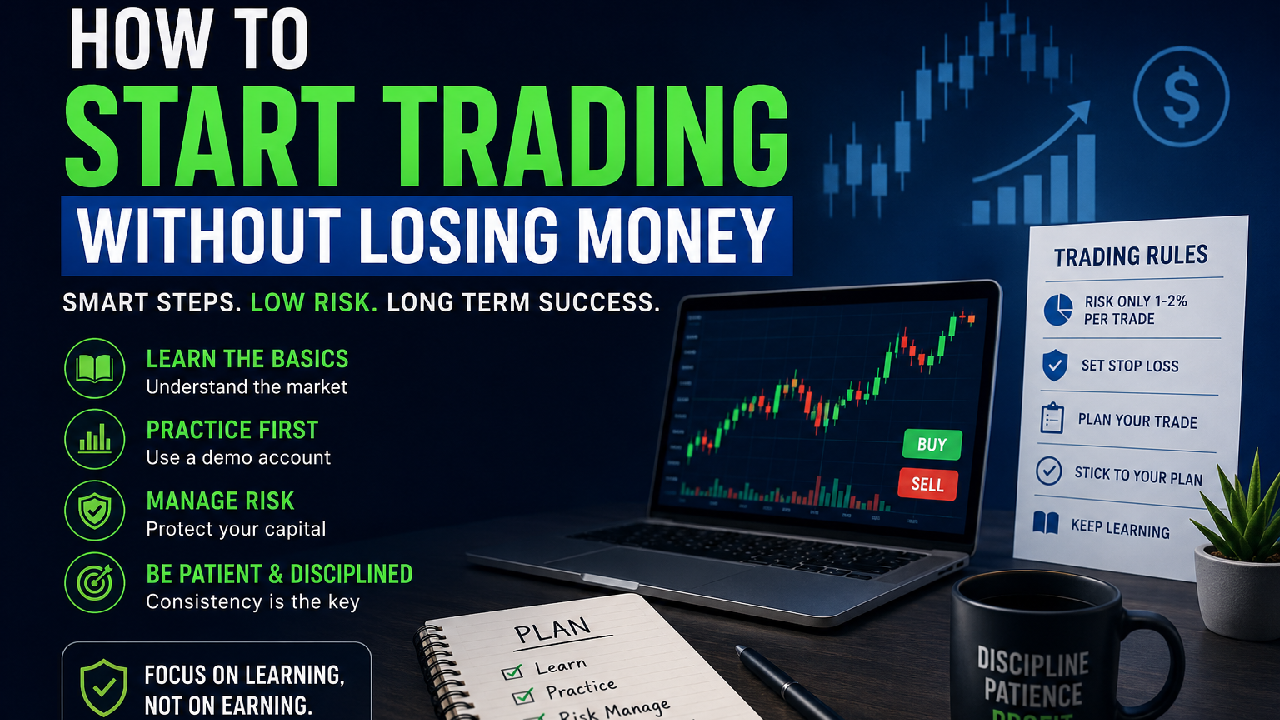
Beginner Risk Management Guide
Trading is one of the most exciting ways to grow your wealth, but it’s also one of the fastest ways to lose money if you don’t have a proper plan. Many beginners jump into the market hoping for quick profits, only to experience heavy losses within days or weeks.
The truth is, successful traders don’t focus on making money first—they focus on protecting their money. If you can preserve your capital, you’ll have enough opportunities to profit over time.
In this guide, you’ll learn the essential risk management strategies every beginner should follow before placing their first trade.
Why Most Beginners Lose Money
Most new traders fail because they:
- Trade without a strategy
- Risk too much on a single trade
- Let emotions control decisions
- Chase quick profits
- Ignore stop-loss orders
- Overtrade after losses
Professional traders understand that losing trades are part of trading. Their goal is to keep losses small and let winning trades grow.
1. Never Risk More Than 1–2% Per Trade
One of the most important rules in trading is limiting your risk.
Imagine you have a $1,000 trading account.
- 1% Risk = $10
- 2% Risk = $20
Even if you lose five trades in a row, your account remains healthy enough to recover.
Beginners often risk 20–50% of their account on one trade, which usually ends badly.
Golden Rule:
Protect your capital first. Profits come later.
2. Always Use a Stop-Loss
A stop-loss automatically closes your trade when the market reaches a predetermined price.
Without a stop-loss:
- Losses can become much larger than expected.
- Emotional decisions often replace logical ones.
- One bad trade can wipe out weeks of profits.
A stop-loss is your safety net.
3. Don’t Trade with Money You Can’t Afford to Lose
Trading always involves risk.
Never trade using:
- Rent money
- Emergency savings
- Loan money
- Credit cards
- Money needed for daily expenses
Only use disposable income that won’t affect your financial stability if lost.
4. Start Small
Many beginners think larger trades mean larger profits.
Instead:
- Start with a small account.
- Focus on learning.
- Build consistency before increasing position size.
Professional traders didn’t become successful overnight.
5. Don’t Chase the Market
A common mistake is entering trades after seeing a sudden price movement.
By the time many beginners enter:
- The move is nearly over.
- Large investors have already taken profits.
- The market reverses.
Patience often produces better trades than excitement.
6. Keep Your Emotions Under Control
Fear and greed are the biggest enemies of traders.
Fear causes:
- Closing winning trades too early.
- Avoiding good opportunities.
Greed causes:
- Holding trades too long.
- Taking unnecessary risks.
- Ignoring trading plans.
Successful traders follow rules—not emotions.
7. Keep a Trading Journal
Record every trade, including:
- Entry price
- Exit price
- Stop-loss
- Take-profit
- Reason for entering
- Result
- Lessons learned
Reviewing your journal helps identify mistakes and improve your strategy over time.
8. Don’t Overtrade
More trades do not mean more profits.
Overtrading usually happens because of:
- Boredom
- Revenge trading
- FOMO (Fear of Missing Out)
Quality trades are always better than quantity.
9. Learn Before You Earn
Before risking real money:
- Study technical analysis.
- Understand market trends.
- Learn candlestick patterns.
- Practice on a demo account.
- Test your strategy.
Education is one of the best investments a trader can make.
10. Think Long-Term
Many beginners expect to double their account in a week.
Professional traders focus on:
- Consistency
- Discipline
- Continuous improvement
- Risk management
Small, steady gains over time often outperform risky attempts at quick profits.
Beginner Risk Management Checklist
Before placing any trade, ask yourself:
✅ Do I have a clear trading strategy?
✅ Have I set a stop-loss?
✅ Am I risking only 1–2% of my account?
✅ Is this trade based on analysis instead of emotion?
✅ Does the potential reward justify the risk?
If you answer “No” to any of these questions, reconsider taking the trade.
Common Beginner Mistakes to Avoid
- Trading without a plan
- Risking too much on one trade
- Ignoring stop-loss orders
- Revenge trading after losses
- Following random social media tips
- Trying to get rich overnight
- Overleveraging
- Trading based on emotions
Avoiding these mistakes can significantly improve your chances of long-term success.
Final Thoughts
Trading isn’t about winning every trade—it’s about managing risk so that no single loss can seriously damage your account. By risking only a small percentage of your capital, using stop-loss orders, controlling emotions, and sticking to a well-tested strategy, you give yourself the best chance to succeed over time.
Remember, the goal isn’t to avoid losses completely; it’s to make sure your winners outweigh your losers. Stay patient, keep learning, and prioritize discipline over quick profits. In trading, protecting your capital is the first step toward building lasting success.