

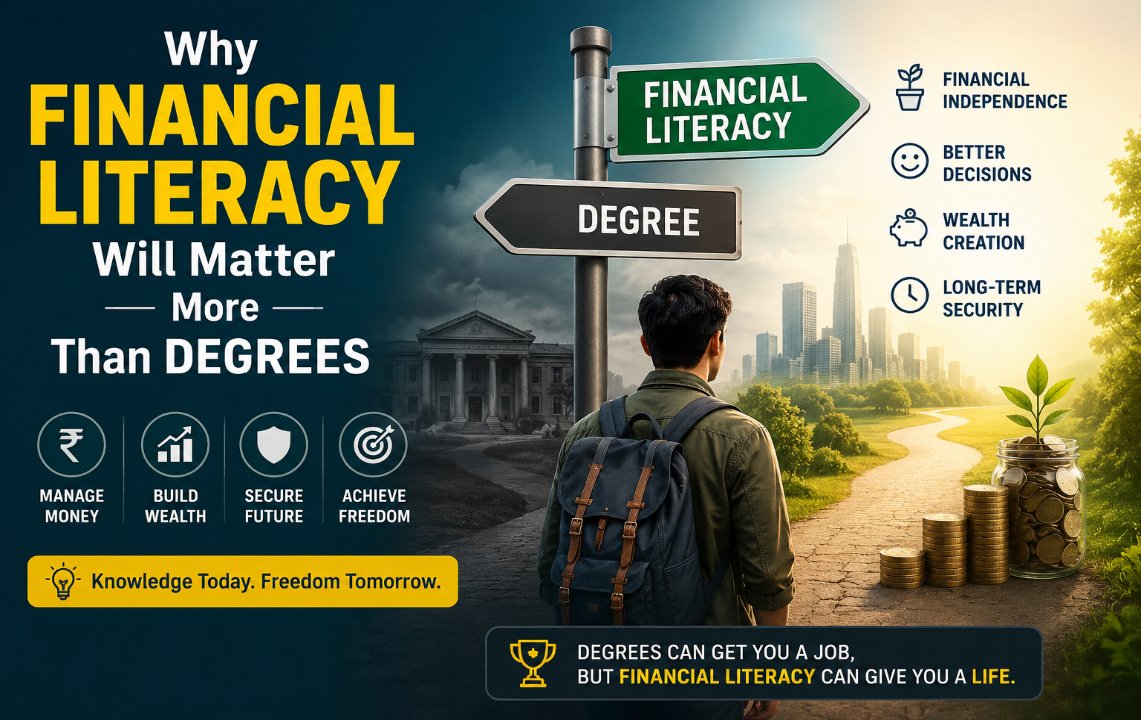
In today’s rapidly changing world, having a degree is no longer the only measure of success. Education can help you get a job, but financial literacy helps you understand what to do with the money you earn.
With rising living costs, changing job markets, inflation, digital payments, online investments, and multiple income opportunities, understanding money has become an essential life skill.
A person can have multiple degrees and still struggle financially. On the other hand, someone with strong financial knowledge can make better decisions about saving, investing, managing debt, and building wealth.
So, why will financial literacy matter more than degrees in the future?
Let’s understand.
What Is Financial Literacy?
Financial literacy means having the knowledge and skills required to manage money effectively.
It includes understanding:
- Income and expenses
- Saving and budgeting
- Loans and debt
- Interest and compounding
- Insurance
- Taxes
- Investing
- Stock markets and mutual funds
- Risk management
- Retirement planning
- Building multiple sources of income
Simply put, financial literacy teaches you how money works and how your decisions can affect your financial future.
A Degree Can Help You Earn, But Financial Literacy Helps You Manage
A degree can improve your career opportunities and earning potential. However, earning money is only one part of financial success.
Imagine two people earning ₹60,000 per month.
Person A spends almost everything, uses credit unnecessarily, has no emergency fund, and does not invest.
Person B follows a budget, maintains an emergency fund, understands investments, manages debt carefully, and invests consistently.
After several years, their financial situations could be dramatically different—even though they started with the same income.
The difference is financial knowledge.
Inflation Makes Financial Literacy Essential
Money loses purchasing power over time because of inflation.
For example, ₹5 lakh today will not have the same purchasing power 10 or 20 years from now.
Simply keeping all your money idle may not be enough to protect your long-term purchasing power. Understanding different investment options and their associated risks can help individuals make informed financial decisions.
This is why financial literacy is becoming increasingly important for young professionals, entrepreneurs, and students.
The Rise of Multiple Income Sources
The traditional idea of relying on a single salary is changing.
Today, people explore different ways to generate income, including:
- Freelancing
- Entrepreneurship
- Online businesses
- Content creation
- Consulting
- Investing
- Skill-based services
- Side businesses
However, earning from multiple sources also requires financial discipline.
You need to understand cash flow, taxation, risk, savings, and investment planning.
Financial literacy turns income into a financial strategy.
Understanding the Stock Market Is Becoming an Important Skill
Investing is no longer limited to financial professionals.
With easy access to online investment platforms, more individuals are exploring stocks, mutual funds, ETFs, and other financial products.
But accessibility doesn’t automatically mean understanding.
Before investing, individuals should understand concepts such as:
- Risk vs. return
- Diversification
- Long-term investing
- Market volatility
- Fundamental analysis
- Technical analysis
- Position sizing
- Risk management
- Investment psychology
The goal isn’t simply to make quick money. The goal is to make informed decisions and manage risk responsibly.
Financial Literacy Can Prevent Costly Mistakes
Many financial problems don’t happen because people don’t earn enough. They happen because of poor financial decisions.
Common mistakes include:
1. Lifestyle Inflation
As income increases, expenses often increase too.
Without financial discipline, a higher salary may not result in greater wealth.
2. Unnecessary Debt
Credit cards and loans can be useful financial tools when managed responsibly. But excessive high-cost debt can become a major financial burden.
3. No Emergency Fund
Unexpected expenses can disrupt financial stability when there is no emergency savings.
4. Investing Without Understanding Risk
Following social-media tips or investing because someone promises quick returns can lead to poor decisions.
5. Ignoring Long-Term Planning
Retirement, insurance, children’s education, and major financial goals require planning well before the money is needed.
Financial literacy helps people recognize these risks before they become expensive mistakes.
Degrees and Financial Literacy Should Work Together
This doesn’t mean degrees are becoming useless.
A professional degree can provide specialized knowledge, career opportunities, and credibility.
But financial literacy complements professional education.
Think of it this way:
Degree → Helps you build your career.
Financial literacy → Helps you manage the money generated by your career.
The strongest combination is therefore professional expertise + financial knowledge.
Why Students Should Learn Financial Literacy Early
Financial education should not begin only after someone starts earning.
Students can start learning basic concepts such as:
- Budgeting
- Saving
- Compound interest
- Banking
- Credit
- Investing basics
- Taxes
- Financial goals
Learning these concepts early can help young people develop better financial habits before they begin making larger financial decisions.
Technology Is Making Financial Knowledge Even More Important
Digital banking, UPI, investment apps, AI-powered financial tools, and online financial content have made financial services easier to access.
But increased access also creates new challenges.
People are constantly exposed to financial advertisements, investment influencers, trading content, and promises of high returns.
Therefore, the ability to separate genuine financial education from misleading information is becoming an important skill.
Financial literacy provides the foundation needed to ask the right questions before making financial decisions.
Financial Literacy Is About More Than Becoming Rich
Financial literacy isn’t only about maximizing returns.
It’s about creating financial stability, independence, and confidence.
A financially literate person is more likely to:
- Understand where their money goes
- Plan for emergencies
- Avoid unnecessary debt
- Set realistic financial goals
- Understand investment risks
- Make informed financial decisions
- Prepare for long-term needs
The ultimate goal is not simply having more money.
It’s having greater control over your financial life.
The Future Belongs to Financially Aware Individuals
The job market is evolving. Technology is changing industries. New professions are emerging, traditional jobs are being automated, and income opportunities are becoming more diverse.
In such an environment, financial literacy can become a critical life skill.
Your degree may determine what you know professionally.
Your financial literacy may determine how effectively you use what you earn.
That distinction will become increasingly important in the coming years.
Final Thoughts
A degree can open the door to a career, but financial literacy can help you build a sustainable financial future.
You don’t need to become a professional investor or financial expert. You simply need to understand the fundamentals of money and make decisions based on knowledge rather than emotion or social-media trends.